Self test lactate analysis online: measure and interpret results
Learn how to collect blood samples at home, use an online lactate calculator, and interpret your LT1, LT2, and training zones without a lab visit.
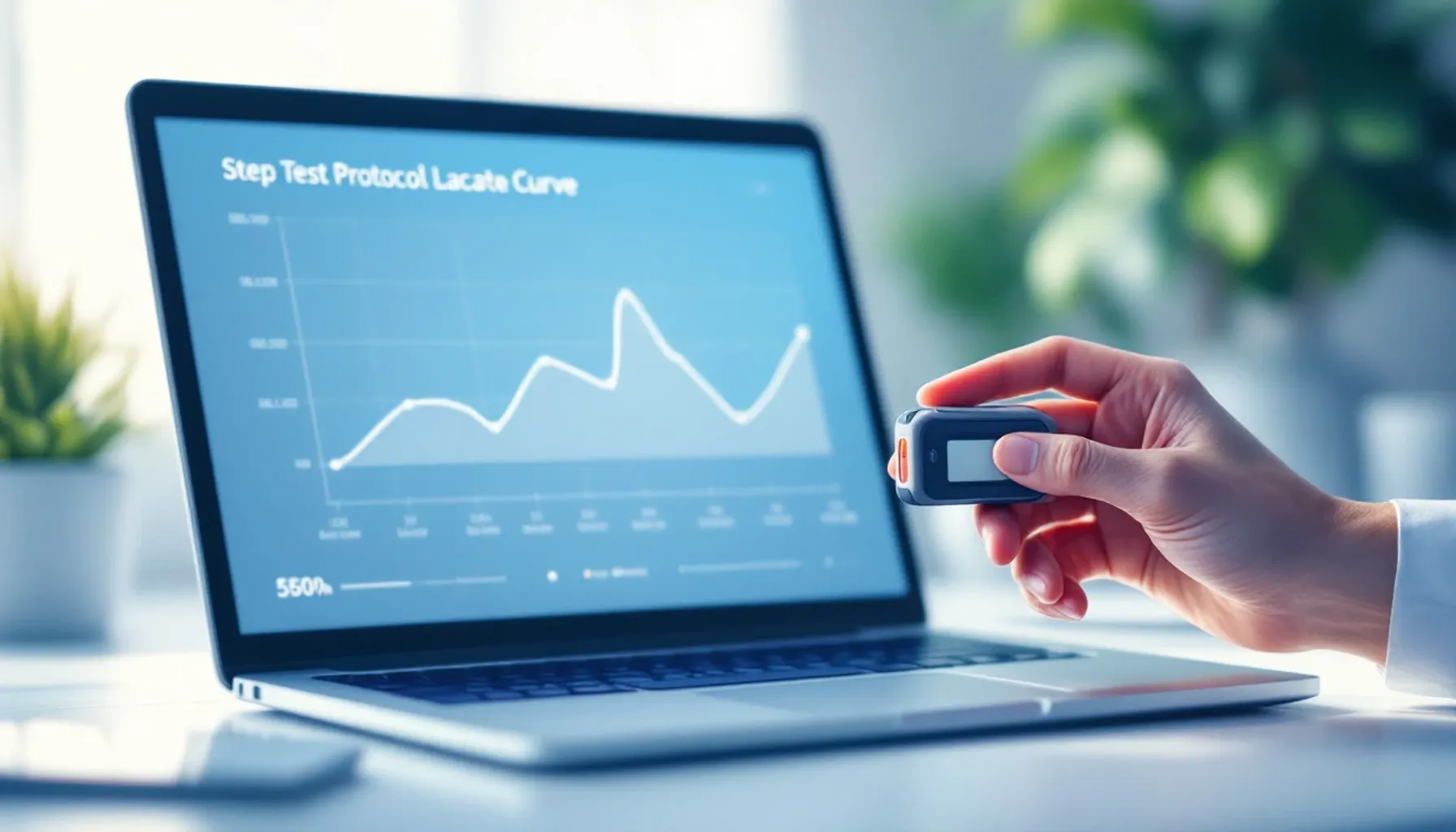
Self Test Lactate Analysis Online: How to Measure, Enter, and Interpret Your Results
Short answer: Self test lactate analysis online is the process of collecting fingertip blood samples during a structured step test at home, then entering those values into a web-based calculator that plots your lactate curve and identifies LT1, LT2, VLamax, and training zones using sport-science methods — no laboratory visit required. You need a portable blood lactate meter, test strips, lancets, and a reliable online tool such as LactateThreshold.online.
|---| | LT1 (aerobic threshold) | The exercise intensity at which lactate first rises measurably above resting baseline | | LT2 (anaerobic threshold) | The higher intensity above which lactate accumulates faster than it can be cleared | | Lactate step test | A structured incremental exercise protocol with a blood sample taken at the end of each stage | | Blood lactate meter | A portable handheld device that measures lactate concentration in a small blood sample | | Lactate curve | A plotted line showing how blood lactate rises across increasing exercise intensities | | VLamax | Maximum rate of lactate production via anaerobic glycolysis; a proxy for anaerobic power capacity | | mmol/L | The standard unit for blood lactate concentration in sport-science contexts | | Online lactate calculator | A web tool that takes step-test data and outputs a curve, thresholds, and training zones |
Equipment You Need Before You Start
You do not need lab infrastructure, but you do need specific hardware. Below are the items and the criteria to evaluate each one.
Meter Selection Criteria: Sample Volume, Unit Display, Strip Shelf Life
When comparing portable lactate meters, check three things before purchasing:
- Sample volume — most sport-focused meters require between 0.5 µL and 5 µL of blood. Smaller sample volumes make fingertip collection easier.
- Unit display — confirm the meter displays results in mmol/L, not mg/dL. Online calculators built for sport-science use expect mmol/L. Entering mg/dL values without converting produces a meaningless curve.
- Strip shelf life and availability — strips expire, and some meters use proprietary strips that can become hard to source. Confirm replacement strips are in stock in your region before committing to a meter model.
Consumables Per Test Session
For a single step-test session you will typically need:
- One strip per stage (a six-stage test uses six strips, plus one or two spares for failed reads)
- One lancet per sample point
- Alcohol wipes for cleaning the fingertip before each sample
- A notebook or phone open to a recording sheet for logging values in real time
Optional Additions: Heart Rate Monitor, Power Meter, or GPS Watch
A heart rate monitor is strongly recommended — it provides a second column of data that helps validate whether a lactate value looks plausible at a given intensity. A cycling power meter or GPS watch with pace data provides the load column the online tool needs to plot the curve on a meaningful x-axis.
---
Choosing a Step Test Protocol
A lactate step test protocol is a structured incremental exercise session in which you complete stages of fixed duration at progressively higher intensities, taking a blood sample at the end of each stage.
Key Protocol Variables: Stage Length, Number of Stages, Starting Intensity
Three variables define any step test protocol:
- Stage length — common choices range from three to five minutes. Shorter stages are faster but give lactate less time to approach a steady state; longer stages are more physiologically stable.
- Number of stages — more stages produce a smoother curve. A minimum of five to six stages is generally considered necessary to identify both LT1 and LT2. Seven to eight stages gives the online calculator more data points to work with.
- Starting intensity — the first stage should sit clearly below LT1 so the early flat portion of the curve is visible. If the first value is already elevated, the curve loses its baseline reference.
Running vs Cycling vs Rowing: Structural Differences
The structural logic is the same across sports: fixed stages, incremental load, end-of-stage blood sample. (how to interpret your lactate curve across different sports) The load variable differs:
- Cycling uses power output in watts
- Running uses pace (min/km or min/mile) or speed (km/h)
- Rowing uses split time per 500 m or watt output on an ergometer
LactateThreshold.online accepts all three load formats; select the correct sport before entering data.
Warm-Up and Cool-Down
A standard aerobic warm-up before the test allows heart rate and lactate to settle near resting levels before the first stage begins. Starting the first stage with an already-elevated lactate value compresses the lower portion of the curve and can obscure LT1. A cool-down after the final stage aids recovery but does not affect the recorded test data.
---
How to Collect and Record Your Lactate Values
Data quality determines curve quality. A single misrecorded value or swapped column can shift the calculated threshold by a meaningful margin.
Sampling Technique: Timing Within the Stage
Take the blood sample in the final 30 seconds of each stage, while still exercising at that stage's intensity. Stopping exercise before sampling allows lactate to redistribute, and the value will not reflect the steady-state concentration at that load. Wipe the first drop of blood away after lancing; use the second drop for the strip.
Recording Format: Load, Lactate, Heart Rate
Record three columns for each stage:
| Stage | Load (watts / pace / km/h) | Lactate (mmol/L) | Heart rate (bpm) |
|---|---|---|---|
| 1 | [value] | [value] | [value] |
| 2 | [value] | [value] | [value] |
The load and lactate columns are required. Heart rate is optional but recommended. Do not mix units within a column — if stage one uses watts, all stages must use watts.
Avoiding the Most Common Data Entry Errors
- Wrong units: entering mg/dL instead of mmol/L produces a curve that appears to show extreme values. Verify your meter's display unit before the test begins.
- Missing stages: a gap in the sequence (e.g., stages 1, 2, 4, 5 with stage 3 absent) distorts the curve shape. If a sample fails, note it and retake rather than skipping.
- Swapped columns: pasting load values into the lactate column and vice versa is the single most common entry error. Double-check column headers before submitting.
---
Entering Your Data into an Online Lactate Analysis Tool
I build and market small SaaS products myself, so I pay close attention to how well a tool's input flow maps to the user's actual workflow. LactateThreshold.online is structured around the exact sequence an athlete follows: choose sport, enter stage data row by row, confirm units, then run the analysis.
Step-by-Step Data Entry Walkthrough
- Open LactateThreshold.online
- Select your sport (cycling, running, or rowing)
- Enter each stage as a row: load value, lactate value, and optionally heart rate
- Confirm the lactate column is in mmol/L
- Click the analysis button to generate the curve
Fictional example for illustration only: A cyclist enters six stages at 150 W, 175 W, 200 W, 225 W, 250 W, and 275 W with lactate values of 1.1, 1.3, 1.7, 2.4, 3.8, and 6.1 mmol/L. These numbers are not representative of any specific athlete's data or typical performance benchmarks.
What the Tool Calculates: LT1, LT2, VLamax, Lactate Curve
The calculator outputs:
- LT1 — the aerobic threshold, identified at the first inflection point of the curve
- LT2 — the anaerobic threshold, identified at the second, steeper inflection
- VLamax — an estimate of maximum anaerobic lactate production rate, derived from the curve shape
- Training zones — intensity ranges anchored to LT1 and LT2, expressed in your load unit
How to Save Your Results
Use your browser's print-to-PDF function or the tool's built-in export option to save the curve and threshold values. Store results alongside the test date and protocol details so you can compare across sessions.
---
Reading Your Lactate Curve and Threshold Estimates
What a Well-Formed Curve Looks Like
A well-formed lactate curve starts with a flat or gently rising section at low intensities, bends upward at a first inflection point, then rises steeply toward the highest stages. If the curve rises steeply from stage one, the starting intensity was too high. If it stays flat across all stages, the protocol did not reach a high enough intensity to expose LT2.
Locating LT1 and LT2 on the Curve
- LT1 (aerobic threshold) sits at the first visible departure from the baseline — the point where lactate begins to rise faster than it did in the early stages.
- LT2 (anaerobic threshold) sits at the second, sharper inflection — where the curve bends steeply upward.
The online tool marks both points automatically. Reviewing the curve visually alongside the calculated markers helps you judge whether the algorithm's placement matches the shape you can see.
Translating Thresholds into Training Zones
The tool maps LT1 and LT2 to training zones expressed in your load unit (watts, pace, or speed). Zones below LT1 correspond to aerobic base work; the zone between LT1 and LT2 corresponds to tempo or threshold training; zones above LT2 correspond to high-intensity work. How you apply those zones to your training plan is a decision best made with a qualified coach, particularly if you are preparing for competition or managing any health condition.
---
Self Test Lactate Analysis Readiness Checklist
Use this checklist before every test session and again after entering your data.
Pre-Test Equipment and Protocol Check
| Item | Check |
|---|---|
| Blood lactate meter charged or with fresh battery | ☐ |
| Sufficient strips for all stages plus two spares | ☐ |
| Strips within expiry date | ☐ |
| Lancets loaded and accessible | ☐ |
| Alcohol wipes available | ☐ |
| Meter confirmed to display mmol/L (not mg/dL) | ☐ |
| Stage count and stage duration decided | ☐ |
| Starting intensity set below expected LT1 | ☐ |
| Load increments consistent across all stages | ☐ |
| Recording sheet or spreadsheet open and ready | ☐ |
Data Recording and Entry Check
| Item | Check |
|---|---|
| Three columns ready: load, lactate, heart rate | ☐ |
| All load values in the same unit (watts / pace / speed) | ☐ |
| All lactate values in mmol/L | ☐ |
| No missing stage rows | ☐ |
| Columns not swapped before pasting into tool | ☐ |
| Sport selected correctly in the online tool | ☐ |
Post-Analysis Curve Sanity Check
| Question | Expected answer |
|---|---|
| Does the curve start flat or near-flat? | Yes — if not, starting intensity may have been too high |
| Is there a visible first inflection in the LT1 region? | Yes — if not, consider adding more stages at lower intensities |
| Does the curve rise steeply in the upper stages? | Yes — if not, the protocol may not have reached LT2 intensity |
| Are LT1 and LT2 markers placed at plausible points on the curve? | Yes — if not, check for data entry errors before re-running |
| Are training zone outputs in your expected load range? | Yes — large deviations suggest a unit error (mg/dL entered instead of mmol/L) |
---
FAQ
Do I need a prescription or medical supervision to test my own lactate at home? Requirements for purchasing blood lactate meters and lancets vary by country. In many jurisdictions these are sold as sports or wellness devices without a prescription, but regulations differ — check the rules in your country before purchasing. If you have a cardiovascular condition, diabetes, or any health concern that affects exercise capacity, consult a qualified medical professional before performing maximal or near-maximal exercise tests.
What lactate meter works with an online analysis tool? Any meter that displays results in mmol/L can be used. LactateThreshold.online accepts manually entered values, so meter brand does not affect compatibility. What matters is that the meter displays mmol/L and that strips are available in your region. Verify both before buying a specific model.
How many data points do I need for a reliable lactate curve? A minimum of five to six stages is generally considered necessary to identify both LT1 and LT2. Fewer stages can produce a curve with insufficient shape to locate both inflection points. Seven or eight stages — provided they span the full intensity range from well below LT1 to above LT2 — give the calculation engine more to work with.
Can I use the same online tool for running and cycling tests? Yes. LactateThreshold.online supports running (pace or speed as the load column), cycling (watts), and rowing (split or watts). Select the correct sport before entering data, because the tool uses the load unit to scale the x-axis and to express training zone outputs.
What is VLamax and why does the online tool calculate it? VLamax is the maximum rate of lactate production via anaerobic glycolysis, expressed in mmol/L per second. It is used in sport-science modelling to describe an athlete's anaerobic power capacity and its interaction with aerobic capacity. A higher VLamax indicates a stronger anaerobic system but can also raise lactate production at sub-threshold intensities. The tool derives a VLamax estimate from the shape and values of your lactate curve.
Frequently asked questions
Do I need a prescription or medical supervision to test my own lactate at home?
A fingertip blood lactate test for sports performance monitoring is a self-directed activity, not a clinical procedure. However, if you have any underlying health condition or are unsure whether exercise testing is appropriate for you, consult a qualified healthcare professional before starting. This article covers the sports-performance workflow only and does not constitute medical advice.
What lactate meter works with an online analysis tool?
Any meter that displays results in mmol/L and allows you to read and record the value manually is compatible with a web-based calculator like LactateThreshold.online, because you enter the numbers yourself. Check that your meter's strips are in date and that you note the unit (mmol/L vs mg/dL) before entering data, since mixing units will distort the curve.
How many data points do I need for a reliable lactate curve?
Most sport-science step-test protocols use between five and eight stages to produce a curve with enough resolution to identify LT1 and LT2. Fewer than four data points generally produce a curve that is too flat or too steep to locate thresholds reliably. More stages increase resolution but also fatigue, so protocol design involves a trade-off.
Can I use the same online tool for running and cycling tests?
Yes, provided you enter the correct load unit for each sport — watts or speed for cycling, pace or speed for running. LactateThreshold.online supports multiple sport types. The curve shape and threshold logic are the same; only the x-axis unit changes.
What is VLamax and why does the online tool calculate it?
VLamax (maximum lactate production rate) is a sport-science metric that describes how quickly your anaerobic glycolytic system produces lactate. It is calculated from step-test data and helps coaches and athletes understand the balance between aerobic and anaerobic energy contribution. A higher VLamax can indicate strong sprint capacity but may also mean faster lactate accumulation at sub-maximal intensities.